Quick Links to Zahanas activities in Madagascar:
click on any image/issue below


- Trees Grow - and the boy who planted it
- Getting ready for the 23/24 school year
- Remembering the dream of a woman
- In Memoriam of Jean (12/23)
- What is the Zahana Cup?
- Seed balls for reforestation
- Vegetable Gardens in 2022
- Celebrating seed balls
- Rice bank revitalized
- Jean Zahana's Master Gardener
- Seed Balls
- Innovative pastry oven
- Bicycles for the road
- Hand cranck sewing machine
- Evaluating Reforestation
- Most innovative cookstove 2020
- Our third gardener
- Bicycles mean mobility
- Back to school is different 2020
- Improved cookstove update
- CEPE once again in 2020
- School closure and COVID-19 Prevention
- Improved cookstoves
- Expaning tree nursery
- Innauguration: second school building
- Moringa trees in the school garden
- Clean and Safe Water in Fiarenana
- Solar cooked moringa noodle soup
- Award of Excellence for CARMMA
- CARMMA and CSB1/CSB2
- First Baby born in the new CARMMA rooms
- Moringa in the school yard
- One man, one tree, 1000 Morings seeds
- Video: Moringa Leaves Omelette
- Planting a Moringa Forest in Madagascar
- Zahana 10th Anniversary
- Raising piglets for breading and income
- Potato a new 'old' idea
- Participatory Development Explained
- A failure story with a happy end
- Awarding reforestation
- Int. Women's Day
- Breadfruit - solar cooked videos
- Solar Cooker Videos
- How to video: Build a school
.png)
.png)
.png)
More School Links
- Moringa in the school garden
- Highschool exam passed
- Ready for high school entrance exam
- School lunch
- Santa visits the school
- Successful in Secondary School
- Solar Box cookers in the schools
- Watch our How to build a school video
- Getting ready for secondary school
- Celebrating the CEPE diploma (back in 2011)
- Creating a beautiful environment
- The first school in Fiadanana (2006)
- The school in the second village (2009)
- School gardens
- Soup in the School of Fiarenana
- Training the teachers on site
Building our schools:
- Building a second school (2009)
- Inaugurating the community built school (Mar 2010)
- Photos of the almost finished school (Jan. 2010)
- The Community is building their school (Sept 2009)
Building the first school (2006)
Zahana is building a second school collaboratively in Fiarenana in Madagascar
In August 2009 the community in Fiarenana started building their school:
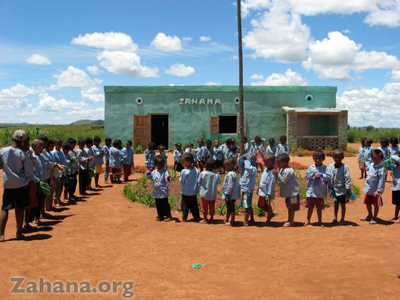
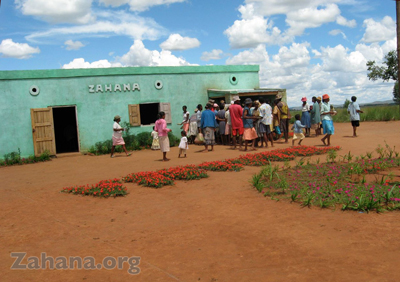
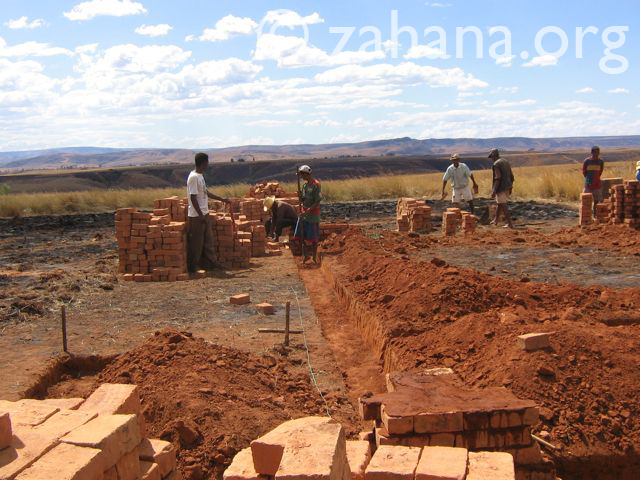
More photos like this one see our slide show about the community building their school
Zahana implemented this project based on our experience in building a school with the community of Fiadanana in 2006.
In their community meetings the community of Fiarenana identified the need for a school as one of their priorities. This is an important shift in focus from the initial meetings with Zahana in early 2008, when many of the villages children were still able to walk to neighboring villages to attend public schools. With a literacy rate of over 80% among the adults in Fiarenana, the parents see the need, importance and value of a school for their children. This might be a reflection of the villages readiness to tackle their own development issues and seek solutions beyond the traditional boundaries such as trying for a second rice harvest (as the only village in the area) and vegetables other villages never tried to grow.
To demonstrate their willingness to collaborate with Zahana they have already made 13,000 bricks for a future school building. In contrast to many other villages over 80% of the parents had gone to school as children themselves, can all read and write, and see the value and need for education for their children. The community envisions a school building that could become a leaning center for agriculture, health education and rural improvement that would function more as a rural university than a grade school in the traditional sense.
Zahana hopes that Fiarenana will become the role model for other villages of what is possible if a community comes together and embarks creatively into uncharted territory.
The Situation
The latest census in March 2009 has shown that over 50 of the villages
children between 5 and 15 years of age have currently no access to a
school. In the past more children took it on to walk between one to two
hours each way to different overcrowded schools in neighboring villages.
With the current political crisis parents are weary about such long walks
and prefer to keep their children closer to home.
To make their dream of a school within their community a reality a villager has already donated the land where the school is currently being built by the community (as of August 2009).
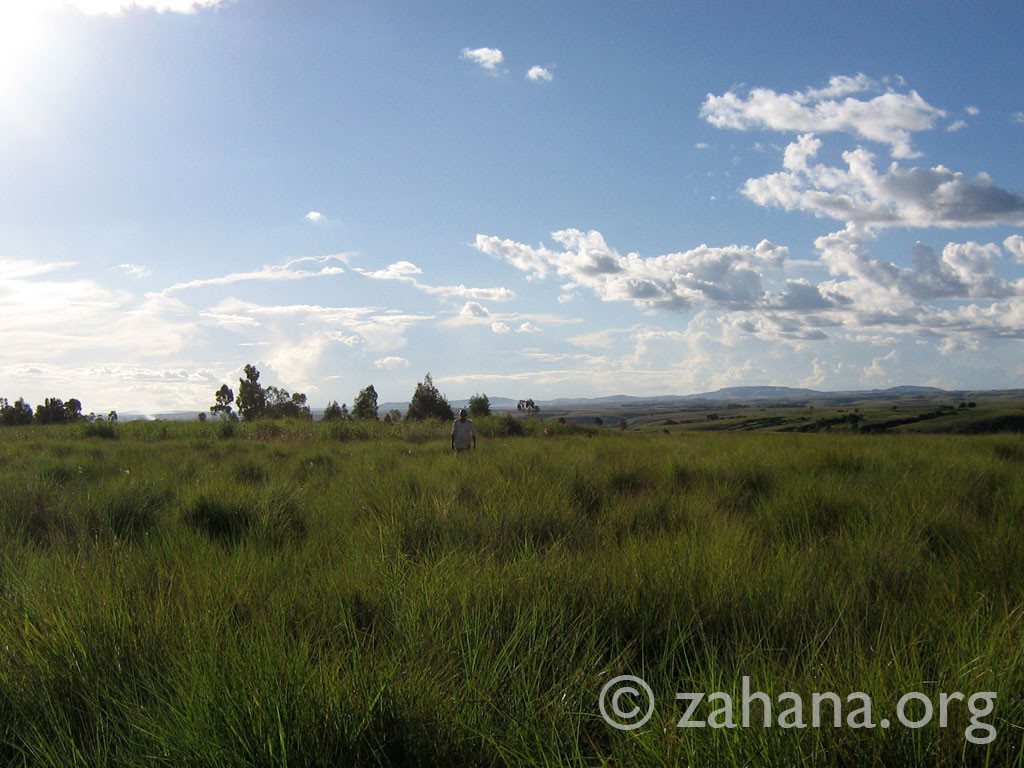
To show Zahana their commitment the community has offered to contribute to the teachers salary as well as contributing their labor in building it, as their share in the effort. In Madagascar teachers are traditionally supported by the community with rice or other agricultural products or by building a house for the teacher to assist with their costs of living.
Building a living fence
In addition the community has decided that the parents have to plant a
tree for each child that will go to school. They are planting orange,
mangos and avocado trees, and papayas, that will surround the school
as a living fence. Such a living fence creates a sheltered space for
the students, providing shade and food at the same time. In anticipation
of building their school trees are already being planted. The bricks
for the school had been made a few months back already.
Building Fiarenanas School
In this participatory development effort Zahana will again help pay for
the materials that are out of reach for the villagers, while they will
contribute locally available materials, all bricks and their labor to
make this build their school. Zahana will find and hire the teacher.
After selecting the appropriate candidate, Zahana will train the teacher
in a month long tailor made program held in the village of Fiarenana
where she or he will be living and working.
Expandingthe
School Role for Community Education
It has been decided, with the communitys input, that in addition to the
regular school curriculum, such as reading, writing and math for the
children, a strong focus on agriculture, farming practices, crop improvement
and nutrition will become an integral part of the teachers tasks and
role. Expanding the schools scope the community requested adult literacy
programs, health education based on family planning and trainings in
law and land rights. This shifts the focus from a more conventional school
for school age youth towards the rural university for the entire community
that is part of Zahanas vision of continuing community wide education.
Foto?
Finding and training a teacher
The role of a teacher comes with social prestige in Madagascar. Teachers
are treated with great respect by their community similar to a community
elder. At the same time this comes with the responsibility to be a role
model and actively participate in the community life and its development.
When Zahana will launch microcredit projects, it is expected by the community
that the teachers will play an active role in implementing and assisting
in these efforts, such as keeping the books and advising and supervising
the projects.
Special challenges:
Experience has shown that is takes a while to find a suitable candidate
that is flexible enough to work in an environment that never had a school
before and is willing to move to a remote village without any infrastructure,
where the next smaller town with a health center is over an hours walk
away.
On the plus side Fiarenana is a community wiling, interested and ready to changing their situation. They already have much greater crop diversity than surrounding villages and grow many fruit trees that shade their village. Since April of 2009 Fiarenana also has a new community well, with safe clean drinking water. In our neighboring pilot village site of Fiadanana, the running clean and safe drinking water was the deciding factor for the two teachers to accept their post two years ago (link).
Since most subsistence villages in Madagascar are very poor they cannot afford to pay a teachers salary, but public schools are often not available either where parents have to pay also fees for their children. This means their children go without any formal education and do not learn to read and write. To help communities overcoming this obstacle, Zahana helps them financially with the building materials and the expertise to built their school. Based on Zahanas participatory development philosophy building the school is a joint effort, but after completion the upkeep and maintenance of the building becomes the communitys responsibility. The same applies for water systems or grain storage buildings and other participatory efforts.
The new teacher
Zahana has solicited the help of a educational consultant that has visited
Fiarenena to assess the educational needs of the community training requirements
needed for the teacher. Zahana is actively finding and training a suitable
teacher as well as paying the teachers salary for the first two years.
This is done in the hope, that after that initial period, the community
sees the value of having a teacher in their community and works something
out with them to maintain them in their community. Zahana is a small
organization with a very limited budget and is not able to commit to
pay salaries or other obligations for the long run, and so far we could
only built a second school, although we received more requests for schools
from other villages.
- Participatory Development:rebuilding
the old well in Fiarenana
- To read the April 09 progress report please click here
- To read the June 09 progress report please click here
- To read the July 2009 progress report please click here
- The Community is building their school (Photos from Sept 2009)
- Pictures/photos of the almost finished school (January 2010)
- Inaugurating the community built school in Fiarenana (March 2010)